"In Transit" is probably the tracking status you'll see most often, and also the one that explains the least. It's reassuring and vague at the same time. So let's make it concrete: here's exactly what "In Transit" means, what your package is doing when you see it, and when a quiet tracking page is completely normal.
The short answer
"In Transit" means your package has been accepted by the carrier and is on its way, but hasn't reached its final delivery point yet. It's the giant middle chapter of a package's journey — everything between "we've got it" and "it's on the truck for your door." Because that chapter covers so much ground, the same two words can describe a package sitting in a warehouse, riding in a truck between cities, or being flown across the country.
What's actually happening behind the status
A package doesn't teleport from the sender to you. It hops through a network of facilities, and "In Transit" covers all of the in-between steps:
- Origin acceptance: The carrier picks up or receives the package and creates the first scan.
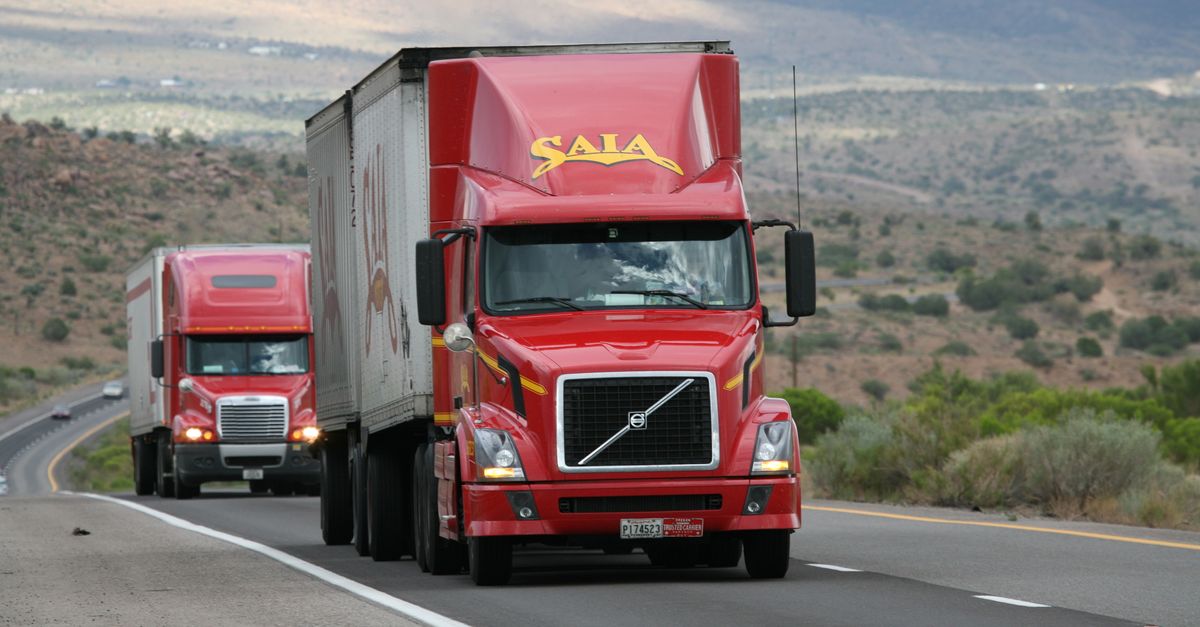
- Line-haul movement: The package travels between sorting hubs by truck, and for longer distances, by plane or rail.
- Facility processing: At each hub, packages are unloaded, sorted by destination, and reloaded. This is where a lot of the "waiting" happens.
- Approaching your area: Eventually it reaches the delivery station closest to you — still "In Transit" until it's loaded for the final run.
Carriers update tracking only when a package is physically scanned at one of these steps. Between scans, the status simply holds. So "In Transit" with no new update usually means your package is mid-journey and hasn't hit its next scan point yet — not that anything is wrong.
Why the updates pause
The biggest source of worry is a gap between scans. Here's why those gaps are normal:
- Long legs between scans. A truck crossing several states may not scan the package again until it arrives at the next hub — often 24 to 48 hours later.
- Weekends and holidays. Facilities run lighter, so a package can sit from Friday night to Monday with no new event.
- Skipped scans. Sometimes a package is loaded without being scanned. It's still moving; the record just has a gap that fills in at the next checkpoint.
- Weather and volume. Storms and peak seasons (like the December holidays) slow the whole network down.
As a rule of thumb, domestic packages commonly go 24–48 hours between meaningful scans, and sometimes longer over a weekend. If you're seeing a longer silence and it's starting to worry you, our guide on why packages get stuck in transit covers how long to wait and when to act.
Variations you might see
Different carriers word the "in transit" phase differently. You may see any of these, and they all mean roughly the same thing — your package is moving through the network:
- In Transit / In Transit to Next Facility
- Arrived at Facility / Departed Facility
- Package in Transit / On the Way
- Processed Through Facility (common on international shipments)
The phrase "In Transit, Arriving On Time" (which USPS often shows) is especially reassuring — it means the carrier still expects to hit the delivery estimate even if there hasn't been a fresh scan.
How "In Transit" differs from other statuses
In Transit vs. Out for Delivery
Out for Delivery is the big one people confuse with "In Transit." Out for Delivery means your package is on the local delivery vehicle and is expected to arrive today. "In Transit" is everything before that final step. If you're waiting on that last leg, see our guide on out for delivery but not delivered.
In Transit vs. a Delivery Exception
A delivery exception means something interrupted the normal flow — a bad address, weather, a customs hold, a failed delivery attempt. That's different from plain "In Transit," which signals nothing is wrong. If your status flips to an exception, read what a delivery exception means.
Where PackageTrackNow fits in
PackageTrackNow is an independent tracking aggregator, not a carrier. When you see "In Transit" on our site, it's the exact status the carrier has recorded — we simply gather it in one place so you can watch USPS, UPS, FedEx, DHL and 1,000+ other couriers without hopping between websites. If the carrier hasn't posted a new scan, no tracking service will have newer information than what you see here. You can check your latest status here whenever you like.
Your takeaway
"In Transit" simply means your package is on its way and hasn't reached the final delivery step. Gaps between scans of a day or two are normal, especially over weekends. As long as the estimated delivery date hasn't passed and the status hasn't changed to an exception, an "In Transit" package is doing exactly what it's supposed to do — moving toward you.