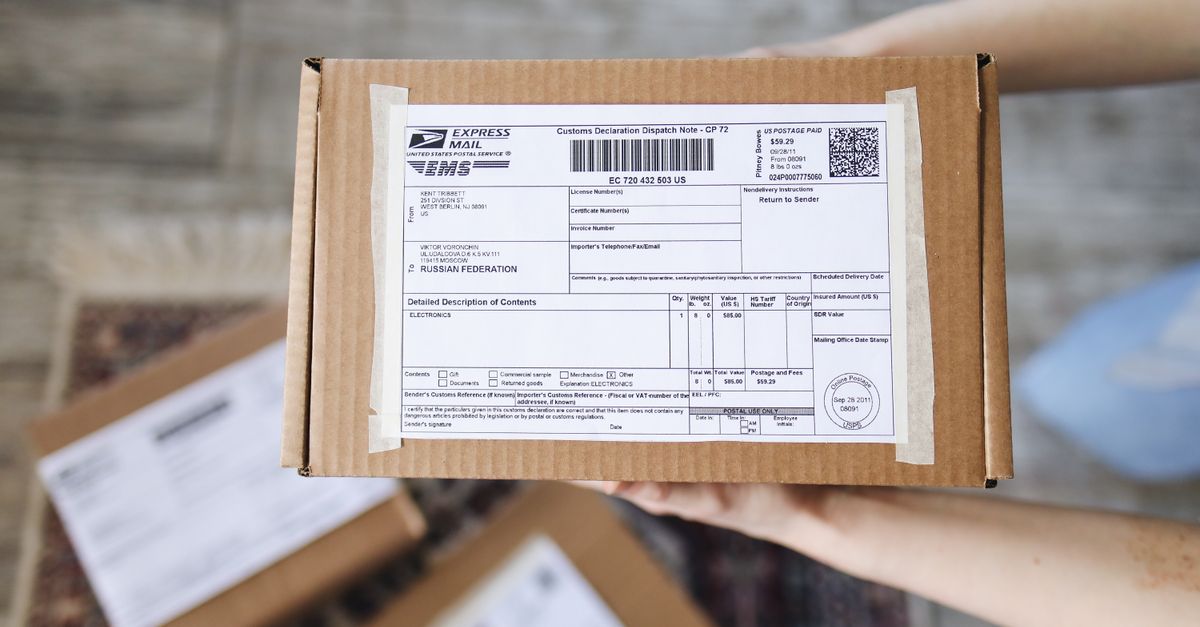
A tracking number looks like a random string, but it isn't. Each carrier uses a predictable format, and once you recognize the pattern you can usually tell which company is carrying your package before you even look it up. That's genuinely useful when a seller gives you a number without saying who's delivering, or when you're staring at a label trying to figure out where to check.
Here's how to read the most common formats, what the digits actually mean, and how to handle the odd cases where the same number gets handed between carriers.
UPS: the 1Z format
UPS is the easiest to spot. The classic UPS tracking number is 18 characters and starts with 1Z, like 1Z999AA10123456784. The structure is consistent:
- 1Z — a fixed prefix that marks it as a UPS package.
- The next 6 characters are the shipper's UPS account number.
- 2 characters identify the service level.
- 8 digits are the package identifier, and the last one is a check digit calculated from the rest.
Not every UPS number uses 1Z. UPS Mail Innovations, freight, and some returns use plain numeric strings (often 9 or 12 digits), but the 1Z form covers the vast majority of parcels you'll receive.
USPS: long numeric strings and the IMpb
USPS is almost always all digits, and usually long. Most domestic packages carry an Intelligent Mail package barcode (IMpb), which produces a tracking number of 20, 22, or up to 26 digits. A common form starts with 9400, 9205, 9407, or 9270, for example 9400 1000 0000 0000 0000 00.
Those leading digits aren't random. A number beginning 92 or 94 is a USPS domestic service like Priority Mail or Ground Advantage. The rest encodes the service type, the shipper's mailer ID, and a package serial number, ending in a check digit. USPS also issues shorter formats for certified mail (a 20-digit number often starting 9407 or 7-series for certified/return receipt), so length alone won't always tell you the exact service, but "long and all-numeric" almost always means USPS.
FedEx: 12, 15, or 20+ digits
FedEx uses numeric-only tracking numbers in a few lengths:
- 12 digits — common for FedEx Express.
- 15 digits — common for FedEx Ground.
- 20 digits — often FedEx SmartPost / Ground Economy, where FedEx carries the package and USPS may make the final delivery.
Because FedEx and USPS are both all-numeric, length is your main clue. A clean 12- or 15-digit number is far more likely FedEx, while a 20–22 digit number starting with 9 is far more likely USPS. When in doubt, don't guess, just paste it in and let a lookup identify it.
DHL: several systems
DHL is really several networks, so the format depends on the division:
- DHL Express typically uses a 10-digit number, sometimes written with a JD or JJD prefix on longer forms.
- DHL eCommerce uses longer alphanumeric strings, frequently beginning with GM, LX, or a number, and often ends up handed to USPS for last-mile delivery in the US.
See our DHL tracking guide for how the divisions differ and where each type of shipment shows its updates.
The S10 international standard
Cross-border mail follows a global convention called UPU S10, and it's the most readable format of all. It's 13 characters: two letters, nine digits, then two letters, like RR123456785CN. Reading it left to right:
- The first letter indicates the service class. R means registered, E is often express (EMS), C is a parcel, L is often an ePacket-type service, U is unregistered.
- The second letter further specifies the service.
- The 9 digits are the serial number, with the 8th being a check digit.
- The last two letters are the ISO country code of origin. CN is China, US is the United States, GB is the United Kingdom, DE is Germany, JP is Japan.
So RR123456785CN reads as a registered item originating in China. That country code at the end is the single most helpful part when a package crosses borders, because it tells you where the shipment's journey began. Our guide on tracking an international package explains what happens after it leaves that country.
Quick reference: spotting the carrier
- Starts with 1Z → UPS
- Long, all digits, starts with 9 (20–22) → USPS
- Clean 12 or 15 digits → FedEx
- 10 digits, sometimes with JD/JJD → DHL Express
- 2 letters + 9 digits + 2 letters → international S10 (read the last two letters for the country)
When the format lies
Formats are strong hints, not guarantees. Two things trip people up. First, multi-carrier handoffs: services like FedEx Ground Economy, UPS Mail Innovations, and DHL eCommerce start with one carrier and finish with USPS, so the number's format reflects the first carrier while the final scans come from the last one. Second, reused patterns: some regional and international couriers mimic common formats. The reliable move is to let an aggregator detect it for you rather than eyeballing it.
That's what PackageTrackNow is built for. Paste any of these formats and it identifies the carrier automatically and shows the full timeline, including the USPS leg of a handoff, without you needing to know the format at all. For a full list of carriers and their patterns, browse our courier directory.
The takeaway
Learn three shapes and you'll cover almost everything: 1Z is UPS, a long all-numeric string starting with 9 is USPS, and two letters plus nine digits plus a country code is international mail. For the rest, don't overthink the digits, paste the number into a tracker and let it name the carrier for you.