International tracking confuses people because a package doesn't ride one carrier the whole way. It's a relay. The shipment starts with one postal or courier service in the origin country, gets handed to an airline or export hub, clears customs on both ends, and finishes with a completely different last-mile carrier near you. Each handoff has its own scans and its own vocabulary, and gaps between them are normal.
Once you understand the relay, the confusing "stuck for a week" moments make sense. Here's how to follow a package end to end.
Start by reading the number
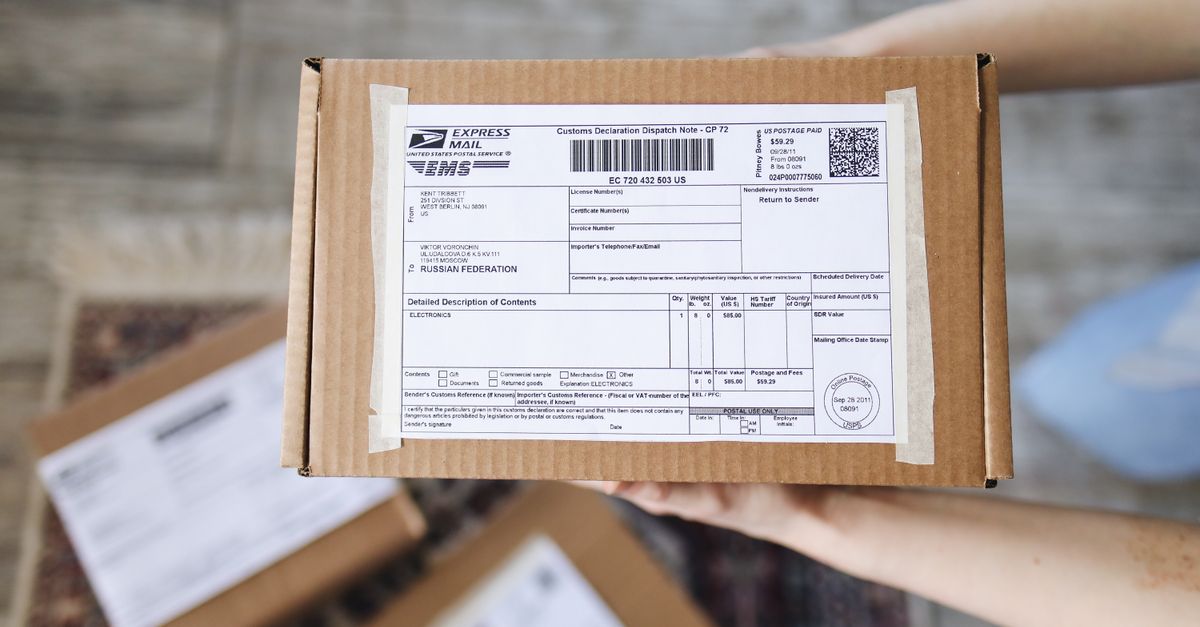
Many international shipments use the UPU S10 format: two letters, nine digits, two letters, like RR123456785CN. The last two letters are the ISO country code of origin, so CN is China, DE is Germany, GB is the United Kingdom, JP is Japan. The first letter hints at the service class (R registered, E express/EMS, C parcel). Knowing the origin tells you which postal service does the first leg. Our guide on how to read a tracking number breaks the format down in full.
Courier shipments are different. DHL Express, FedEx International, and UPS Worldwide use their own numbers and carry the package door to door on a single network, which makes them faster to track but usually pricier.
The stages of an international journey
A typical postal international package moves through these phases. Expect to see scans that roughly match each one:
- Origin acceptance — the sender's local post accepts the item. First scan appears.
- Origin processing / export — the item reaches an international sorting center. You'll see something like "Processed through facility" or "Item dispatched to abroad."
- Departure from origin country — often shown as "Departed" or "Left origin country." This is where tracking frequently goes quiet.
- In transit (air/sea) — the silent stretch. There may be no scans for days while the package physically travels.
- Arrival in destination country — "Arrived at destination" or "Received from abroad."
- Customs clearance — "Customs clearance processing," "held by customs," or "released from customs."
- Handoff to last-mile carrier — the local carrier takes over. In the US this is usually USPS.
- Out for delivery / delivered — the familiar final scans.
The handoff is the part that breaks tracking
The single biggest source of "my tracking stopped updating" is the handoff between the origin carrier and the destination carrier. While the package is in the air and between systems, neither carrier is scanning it. The origin post's tracking may go dark after "Departed," and the destination carrier's tracking won't light up until the package physically arrives and is scanned locally.
In the United States, most inbound postal packages are delivered by USPS regardless of which foreign post shipped them. That's why a package from China Post, Royal Mail, or Deutsche Post suddenly starts showing USPS scans near the end. If the origin tracking dead-ends, try the same number on USPS tracking once the package is due to reach the US, because USPS may have picked up the trail even though the foreign post stopped updating.
Customs: what the scans mean
Customs is where anxious waiting usually happens, so it helps to translate the status:
- "Customs clearance processing" — normal. The package is queued for inspection or duty assessment. This can take hours or several days.
- "Held by customs" / "Awaiting payment" — action may be needed. You might owe import duties or taxes, and the package won't move until they're paid. Watch for a notice from the carrier or customs broker.
- "Released from customs" — cleared and moving to the last-mile carrier.
Most low-value personal shipments clear without you doing anything. When duties are owed, the carrier that handles clearance (often the last-mile carrier or a broker) will contact you with instructions. Don't ignore those messages, because unpaid duties can send a package back.
Why one number, not five, is the goal
Following an international package across multiple carrier websites is exhausting. The origin post's site is in another language, the destination carrier is a separate lookup, and the two rarely link to each other. This is exactly where an aggregator earns its keep. Paste the number into PackageTrackNow and it stitches the origin scans and the destination (usually USPS) scans into a single timeline, so you see the whole relay in one place instead of guessing which site has the latest update. For courier shipments, our DHL hub and the full courier directory cover the door-to-door networks.
Realistic timeframes
Set expectations so silence doesn't feel like loss. Express couriers (DHL, FedEx, UPS) typically deliver internationally in 2–7 business days with rich tracking the whole way. Postal international services vary enormously, commonly 1–4 weeks, and economy or untracked options can take longer. A week with no scans during the air-transit and customs phases is common for postal shipments and usually means nothing is wrong.
When to actually worry
Give a postal package reasonable time before treating it as lost. If there's been no movement for 2–3 weeks past the estimated delivery window, or a customs "held" status that never resolves, contact the seller first (they can open an inquiry with the origin post) and review our guide on what to do if your package is lost.
The takeaway
An international package is a relay across several carriers and two customs systems, and quiet stretches during air transit and clearance are normal. Read the origin from the S10 country code, expect a USPS handoff for US delivery, and track the whole chain from one timeline in PackageTrackNow rather than chasing updates across foreign carrier sites.